

Project Description
Mechanisms of Neuropeptide Signaling
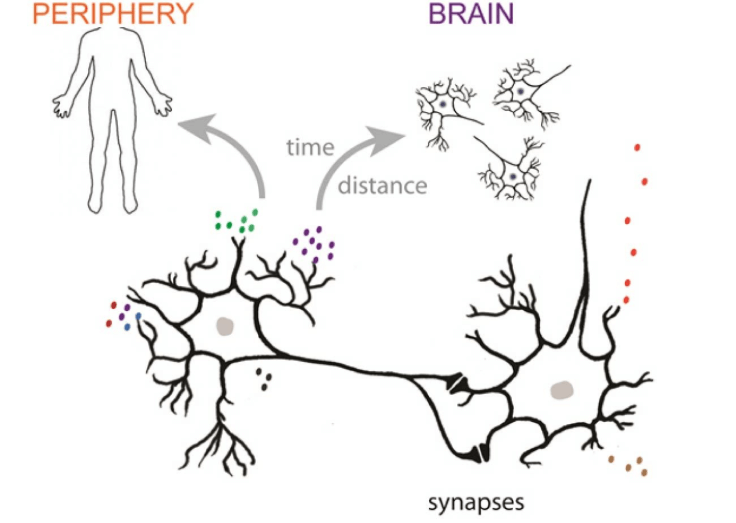
A major focus of the lab was to elucidate the mechanisms by which neuromodulation by neuropeptides encode long-term changes in the brain that influence behavior and aging. Neuropeptides are the most diverse class of neuromodulators that that neurons use to communicate with each other and regulate behavior. Despite strong evidence showing essential functional roles for neuropeptides, at the cellular level a number of questions remain. To what extent does neuropeptide signaling occur through synaptic versus extra-synaptic transmission? What distance do neuropeptides travel from their sites of release to signal? And on what timescale does this transmission occur? In the worm, we developed tools to monitor neuropeptide signaling at cellular resolution in an intact brain and used them to directly measure endogenous peptide release and binding to receptors on identified neurons using real-time approaches for imaging neuropeptide signaling, in order to understand the dynamics of this process in a living animal. We used biochemistry and genetics to identify the proteins that enable neurite-specific neuropeptide localization and using cell-type-specific genetic manipulations to disable that machinery and thereby probe the behavioral function of extrasynaptic peptide signaling in specific circuits. We also explored the mechanisms by which long range neuropeptide signaling might be regulated. We translated our findings from C. elegans to the mouse to systematically delineate the specific function of neuropeptide signaling in behavior and fluid homeostasis. We also developed a general approach to acutely manipulate individual modes of neurotransmission within defined cell types in the adult mouse brain. We applied this new approach to investigate the behavioral role of neuropeptide signaling within specific circuits in the mouse hypothalamus that utilize an extraordinarily diverse repertoire of neuropeptides to coordinate fundamental physiologic processes and innate behaviors.